Resilience: More Than Simply Bouncing Back
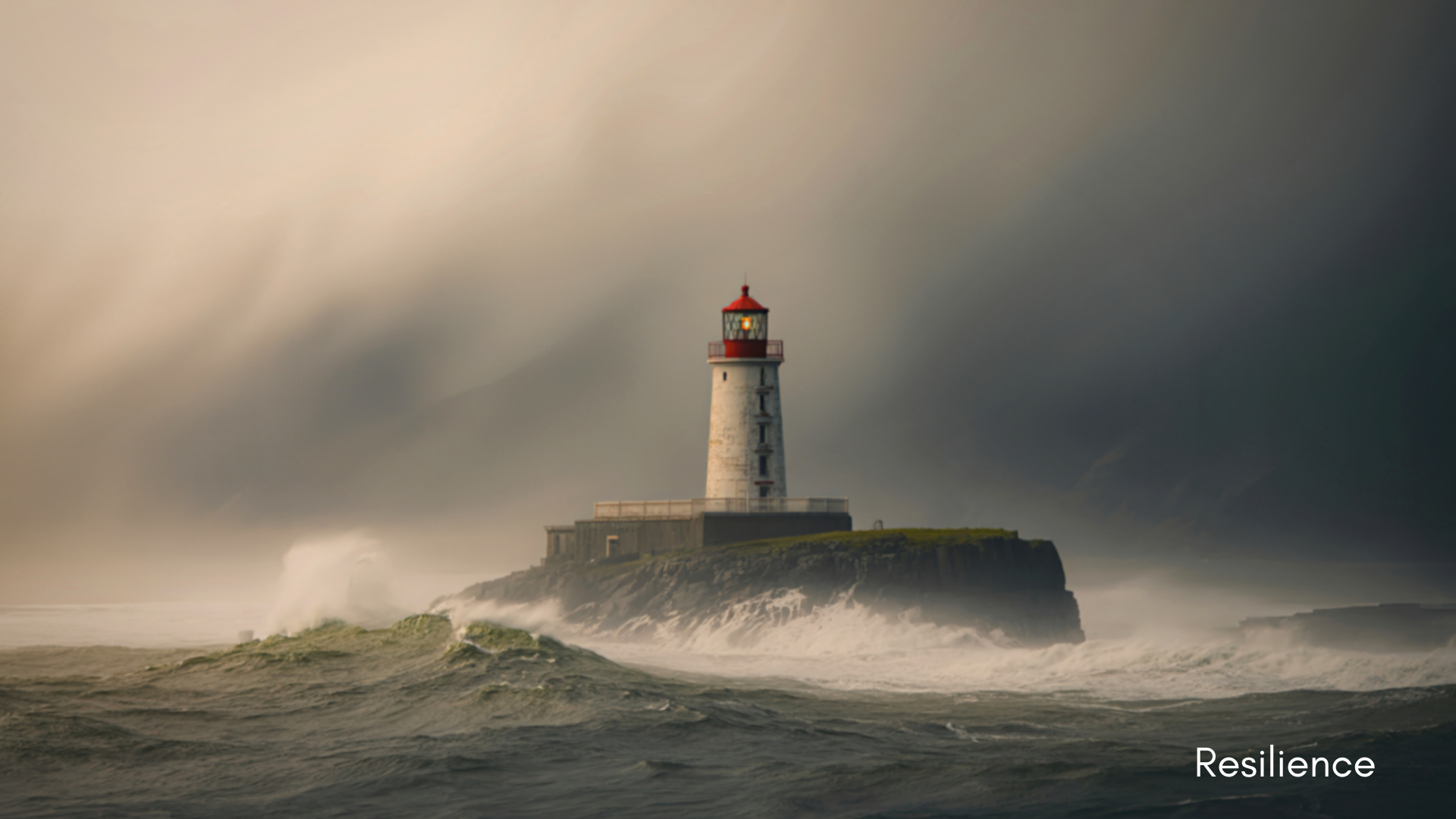
Over the years, I have facilitated many resilience programmes for employees navigating life-changing events. One observation has remained constant throughout every programme I have delivered:
You never know what else someone is carrying.
The redundancy may be the visible event. The divorce may be the obvious crisis. The illness may be the reason they sought support. But beneath the surface are often several compounding losses happening simultaneously.
A struggling employee is rarely dealing with just one challenge.
Perhaps a parent is dying.
Perhaps their marriage is under strain.
Perhaps financial pressure has become overwhelming.
Perhaps they haven't slept properly in months.
Life rarely delivers hardship one event at a time. More often, it arrives in waves, each one making it harder to stay afloat than the last.
That is why change must always be managed with sensitivity, grace and compassion - particularly when it alters someone's livelihood, identity or future.
Too often, people are expected to "roll with the punches" and simply absorb whatever life or the organisation places before them. But what if they don't yet possess the coping skills? What if they have exhausted every emotional resource available to them? At what point does one more setback become the proverbial straw that breaks the camel's back?
As an HR professional, I have often been the person delivering difficult news.
It never became easier.
We are expected to remain composed, to "do our jobs," and somehow leave our emotions at the office. But professionalism should never require us to surrender our humanity.
Delivering devastating news with kindness does not make us weak.
Allowing someone dignity in one of the worst moments of their life is not poor business practice.
Watching another human being grieve deserves our presence, our patience and our compassion.
Sometimes the greatest gift we can offer is simply allowing someone the time and space to absorb what has happened before expecting them to move forward.
Ironically, it took my own experience to remind me of everything I had spent years teaching others.
I had already been travelling for days, trying to reach the funeral of a loved one.
A delayed flight caused me to miss my connection.
The next flight was cancelled because of technical problems.
I was exhausted.
Emotionally depleted.
Unable to find meaningful assistance.
Airline staff directed me to an app that they themselves struggled to navigate. Every solution seemed to create another problem, and every hour that passed took me further away from where I desperately wanted to be.
Home.
Family.
A final goodbye.
Grief and frustration became intertwined.
It was no longer simply about delayed flights.
It was about loss.
In those moments, my resilience was genuinely tested.
Would I collapse into despair?
Or would I somehow keep making one decision after another, hoping that eventually one of them would lead me home?
That experience caused me to question something I have taught for years.
What is resilience, really?
Is resilience simply the ability to keep going?
Or is it something far deeper?
During my resilience workshops, I often ask participants a question that initially catches them by surprise.
"If everything failed - your health, your finances, your career, your relationships - and you lost almost everything, where would you draw your strength from?"
The overwhelming majority answer the same way.
"My faith."
Not everyone shares the same beliefs, but almost everyone reaches for something larger than themselves.
For some, it is God.
For others, it is purpose.
For others still, it is family, hope, community or an unwavering belief that tomorrow can be different from today.
Resilience, then, is not simply grit.
It is not pretending everything is fine.
It is not suppressing emotion or carrying on as though nothing hurts.
True resilience is finding something strong enough to carry you when you can no longer carry yourself.
It is believing that pain has an end.
That circumstances change.
That even in the darkest season, there is still a future waiting beyond today's suffering.
Perhaps that is why the words, "This too shall pass," have comforted people for centuries.
Not because they minimise suffering, but because they remind us that suffering is not permanent.
My journey also left me with questions I don't pretend to have fully answered.
Why do some people become overwhelmed by comparatively small setbacks while others endure unimaginable loss and somehow continue moving forward?
Can resilience actually be strengthened?
Does experiencing hardship build emotional capacity, or does it simply reveal strengths we never knew we possessed?
And perhaps one of the most important questions of all:
Are we unintentionally doing our children a disservice by removing every obstacle from their path?
No loving parent wants their child to suffer.
But neither can we protect them from every disappointment, every rejection or every loss.
Life will eventually introduce hardship.
Our role is not to eliminate it.
Our role is to equip them with the emotional tools, healthy relationships, perspective and inner resources that allow them to face life's inevitable storms with courage, grace and hope.
Perhaps resilience is not about becoming harder.
Perhaps it is about becoming stronger without becoming bitter.
More compassionate without becoming fragile.
More hopeful without denying reality.
And perhaps resilience is ultimately less about surviving adversity than about discovering who we become because of it.
Resilience isn't the absence of pain; it's the decision that pain will not have the final word.